
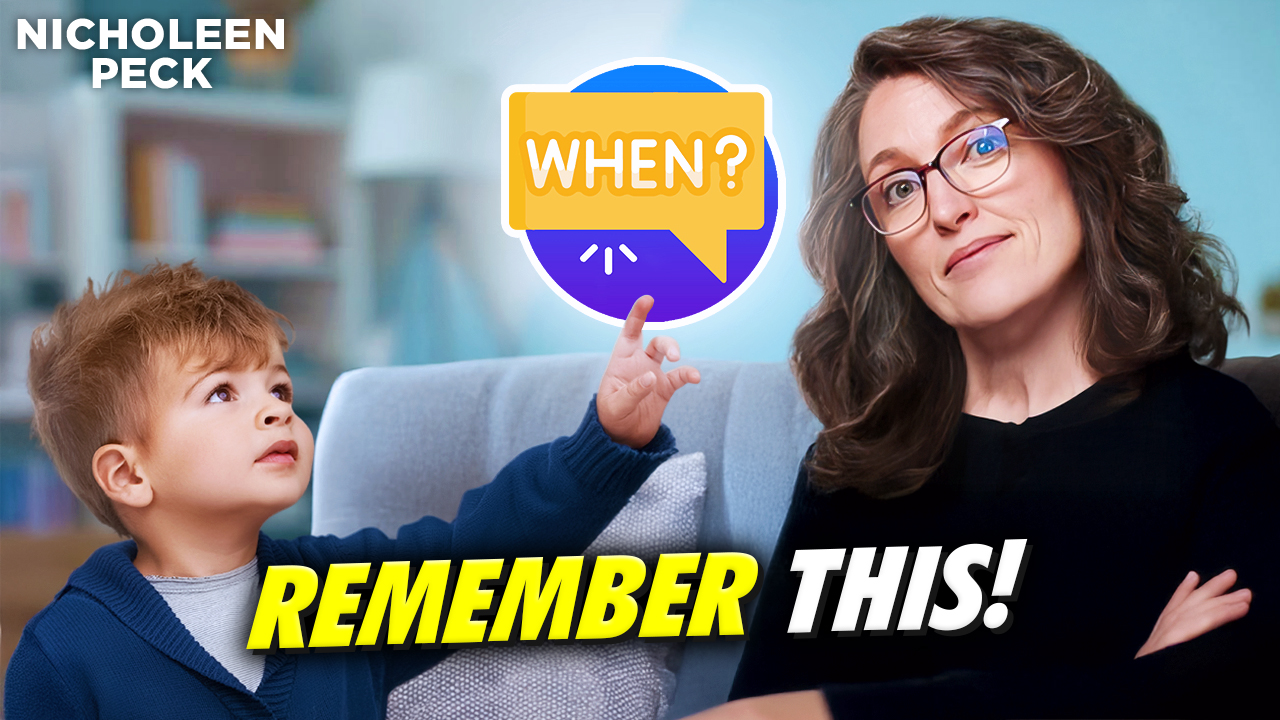
When To Start Disciplining A Child (Sooner Than You Think)
When To Start Disciplining A Child (Sooner Than You Think)
Many parents wonder when discipline should begin. Is a toddler too young? Should you wait until a child can fully understand explanations? The truth is that effective discipline starts much earlier than most people realize. While young children may not have the cognitive ability to connect complex ideas, they are constantly learning through repetition, observation, and experience. The key is understanding how children develop and using age-appropriate teaching methods that build self-regulation, responsibility, and good communication from the very beginning.
Why Young Children Need Repetition
One of the biggest challenges parents face is feeling like they're repeating themselves endlessly. You may tell your child not to hit the cat, only to find them hitting the dog moments later. Or you may explain one rule at dinner, only to have to repeat a similar rule the next day.
This doesn't mean your child isn't learning.
Young children have an immature prefrontal cortex—the area of the brain responsible for logic, planning, problem-solving, and self-control. Because this part of the brain is still developing, children often struggle to apply one lesson to a similar situation.
For example:
If a child learns not to draw on the wall, they may not automatically understand that drawing on furniture is also unacceptable.
If they are told to eat a few bites of spaghetti, they may not realize the same expectation applies to a grilled cheese sandwich the next day.
Teaching young children requires patience and repetition. Repetition isn't evidence that learning isn't happening—it's actually how learning happens.
The Common Mistake Parents Make
Many parents assume that because young children require constant reminders, discipline should be postponed until they are older.
This belief often leads parents to think:
"They're too young to understand."
"They'll grow out of it."
"There's no point correcting them yet."
In reality, children are learning from the moment they are born. They learn through observation, routines, emotional experiences, and the responses they receive from caregivers.
The earlier parents begin teaching healthy habits and expectations, the stronger those foundations become.
So, When Should You Start Disciplining A Child?
The answer is simple:
Start teaching from birth.
Of course, this doesn't mean applying consequences to a newborn or expecting perfect behavior from an infant. Instead, it means intentionally teaching skills, routines, and emotional regulation from the earliest stages of life.
Discipline is not primarily about punishment. It is about teaching.
Teaching Calmness From Infancy
One of the first skills parents can teach is calmness.
Even babies can begin learning emotional regulation through modeling and repetition. Parents can:
Model calm breathing
Use soothing voices
Create calming routines
Introduce a designated calm space
When caregivers consistently demonstrate calm behavior, children begin to mirror those behaviors. Over time, they learn that calmness is a tool they can use to manage their emotions.
Simple techniques such as encouraging deep breaths, using gentle prompts, and creating predictable calming routines can have a powerful long-term impact.
The Power of Mimicking
Young children learn primarily through imitation.
Before they fully understand language, they copy what they see and hear. This is why parents can begin teaching important skills long before children are capable of explaining those skills themselves.
For example, children can learn to:
Look at a parent when spoken to
Use simple signs or gestures to communicate needs
Take deep breaths when prompted
Respond positively to routines
Practice calming behaviors
Initially, children mimic these actions without fully understanding them. Later, those behaviors become habits and eventually develop into intentional skills.
The Four Basic Skills of Self-Government
As children grow, parents can begin teaching four foundational skills that address the vast majority of behavior challenges.
1. Following Instructions
Children learn how to listen, respond appropriately, and complete tasks when directed.
2. Accepting No Answers and Criticism
This skill helps children handle disappointment, correction, and unmet desires without emotional outbursts.
3. Accepting Consequences
Children learn that actions have outcomes and that responsibility is a normal part of life.
4. Disagreeing Appropriately
This teaches children how to express opinions, concerns, and frustrations respectfully rather than through arguing, whining, or tantrums.
Together, these four skills provide a strong framework for self-government and personal responsibility.
By Age Two, Children Can Learn More Than You Think
Many parents underestimate what young children are capable of learning.
With consistent teaching and practice, even two-year-olds can begin demonstrating:
Following simple instructions
Accepting boundaries
Managing disappointment
Practicing calmness
Using respectful communication
Participating in simple corrective processes
While mastery takes time, the learning process can begin much earlier than most people expect.
Why Intimidation Is Not Effective Discipline
When parents doubt a child's ability to learn, they often resort to intimidation-based discipline methods such as:
Yelling
Threatening
Aggressive physical redirection
Harsh commands
Punitive reactions
Although these methods may stop behavior temporarily, they often create unintended consequences.
Children may begin to:
Feel unsafe around their parents
Become anxious about making mistakes
Withdraw emotionally
Monitor adult moods instead of learning self-control
Develop fear rather than understanding
Effective discipline should strengthen trust, not weaken it.
Your Role Is Teacher, Not Enforcer
Children learn best when parents view themselves as teachers rather than punishers.
A teacher:
Remains calm
Provides guidance
Explains expectations
Offers correction without hostility
Allows opportunities to practice and improve
When children feel safe, they are far more receptive to learning and growth.
Consistency Matters More Than Speed
Many parents become discouraged because they don't see immediate results.
However, child development is a gradual process.
The goal is not instant obedience. The goal is long-term skill development.
Every calm correction, every repeated instruction, and every teaching moment helps build neural pathways that support future success.
Children may not demonstrate perfect behavior immediately, but they are learning continuously.
Final Thoughts
If you've been wondering when to start disciplining a child, the answer is likely sooner than you think. Teaching begins from birth through modeling, repetition, routines, and calm guidance.
Young children are capable of learning self-regulation, communication skills, boundaries, and responsibility long before they can fully explain those concepts. The key is patience, consistency, and a commitment to teaching rather than intimidating.
Remember that discipline is not about controlling children. It's about helping them develop the skills they need to govern themselves successfully. Start early, stay consistent, and focus on calm teaching. The lessons you introduce today can positively shape your child's behavior and character for years to come.